

Noisy door · Boston, MA
Noisy Garage Door Repair
One call connects Boston homeowners with a local contractor for worn rollers, dry hinges and opener noise. Describe the sound once and talk to the contractor directly.
- One call, one local contractor
- Describe the sound once
- Talk to the contractor directly
- You decide whether to go ahead
Garage door noise
Why a garage door is noisy
A garage door that is noisy when opening and closing is telling you which part is wearing. The sound is the best clue, and a contractor will ask you to describe it.
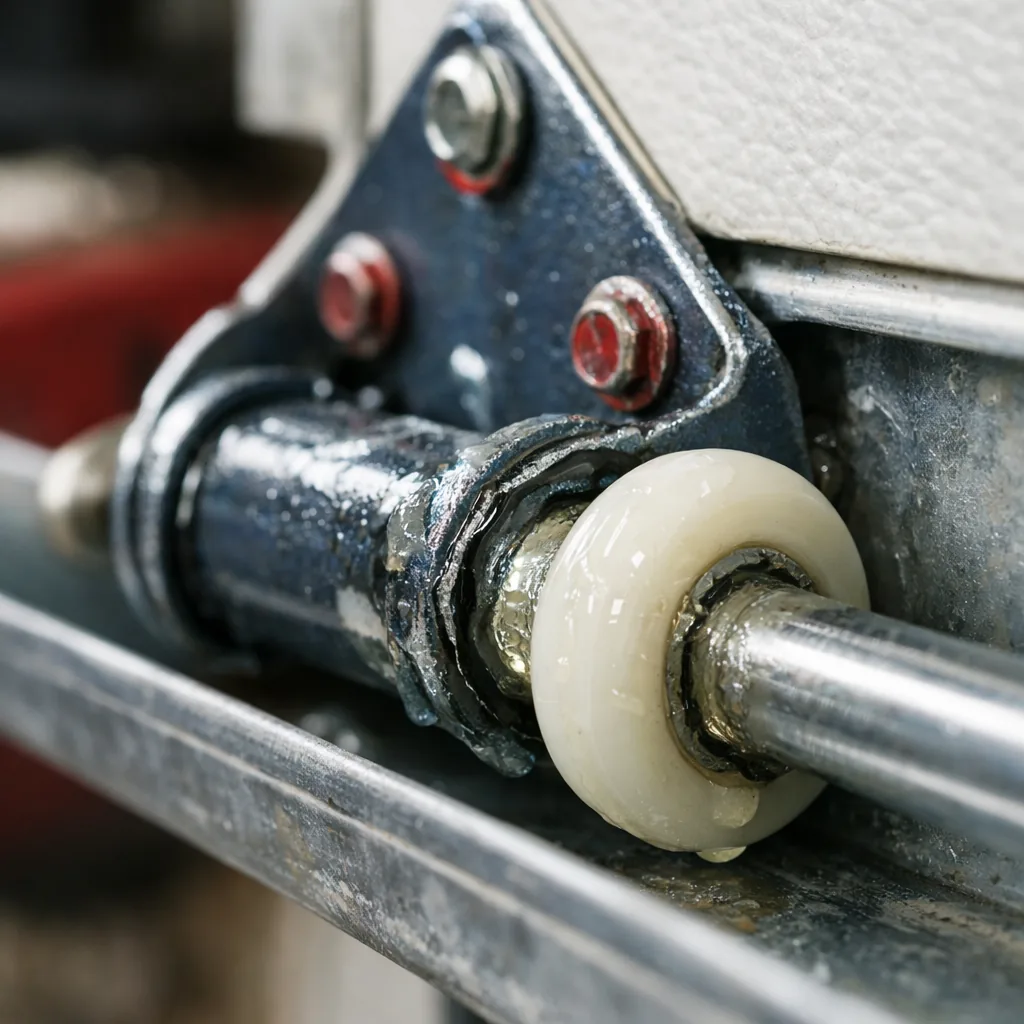
Scraping or squealing from the sides usually means dry or worn rollers and hinges. Steel rollers with no nylon sleeve are the loudest, and rollers wear out over years of use. A rattle that comes with the motor often means loose hardware on the opener rail or track brackets. Grinding from the opener itself points to a worn drive gear, and a chain drive is naturally louder than a belt drive. A loud bang or pop when the door moves can mean a spring that is about to fail or has already broken.
In Boston, freeze and thaw cycles and road salt strip lubricant from tracks and hinges and corrode rollers, so garage doors often get louder after winter. A door that has stayed quiet for years and suddenly gets loud deserves a look sooner rather than later, because noise is often the first sign of a part wearing out.

Diagnosis
What a good contractor checks first
Rollers
Worn or cracked rollers are the most common source of rumbling and squealing. Nylon rollers run quieter than bare steel.
Hinges and brackets
Loose or dry hinges rattle and creak. They are tightened or replaced as needed.
Tracks
A bent or misaligned track makes the door scrape or bind. The track is checked for dents and level.
Lubrication
A garage door lubricant on moving parts quiets most squeaks. Household oils attract dirt and do not last.
Opener drive and mounting
A worn gear, a loose chain or a rail mount that has loosened all transmit noise through the ceiling.
Springs
Pops, bangs or a door that moves unevenly can point to a spring problem, which needs a trade repair.
-
Call and describe the sound
Say whether it is scraping, rattling, grinding or banging, and whether it happens going up, coming down or both.
-
We connect you
We pass the details to a local contractor who handles noisy doors in your part of Greater Boston.
-
The contractor takes it from here
You speak to the contractor directly, and they give you the quote for the repair.
-
You decide
Ask what they think is wearing and what the repair involves, then choose whether to go ahead.
A garage door that screams every morning is wearing out a part.
Describe the sound and get connected with a local contractor who can find it.
Boston, MA
Quieter doors and finished results


FAQ
Noisy garage door questions
Can a garage door be too noisy to ignore?
A little noise is normal, but a sudden change in sound is a warning. Grinding, banging or a door that shakes as it moves should be checked. A bang followed by a door that will not lift is a broken spring, and spring repair is the next step.
Is the noise coming from the door or the opener?
Listen to where it comes from. Sound from the sides of the door is usually rollers or hinges. A grinding or humming from the ceiling is the opener. If it is the opener, opener repair is the related job.
Will lubricating the door fix the noise?
It fixes many squeaks. Spray a garage door lubricant on the hinges and rollers, but keep it off the springs and do not oil the tracks. If the noise comes back, the part is likely worn, and the contractor can replace it.
What should I describe to the contractor?
The type of sound (scrape, rattle, grind, bang), when it happens, and how old the door is. If you can, note whether the opener is a chain or belt drive. Those details narrow down the cause.
Do you fix the door yourselves?
No. Boston Garage Door Expert connects you with an independent local contractor. The contractor gives the quote and does the work, and you decide whether to go ahead.
Boston, MA
Ready to quiet the garage door?
Describe the sound once and get connected with a local contractor who can take it from there.