

Cold weather · Boston, MA
Garage Door Won't Close in Cold Weather
One call connects Boston homeowners with a local contractor for frozen seals, stiff openers and sensor trouble. Describe what the door does once and talk to the contractor directly.
- One call, one local contractor
- Describe what the door does once
- Talk to the contractor directly
- You decide whether to go ahead
Winter garage doors
Why a garage door won't close in cold weather
A garage door that won't close in cold weather is usually reacting to the temperature, not failing outright. Cold stiffens the grease on rollers, hinges and the opener's drive, and the motor can lack the force to finish the travel. It also makes rubber seals stiff and can freeze the bottom seal to the floor.
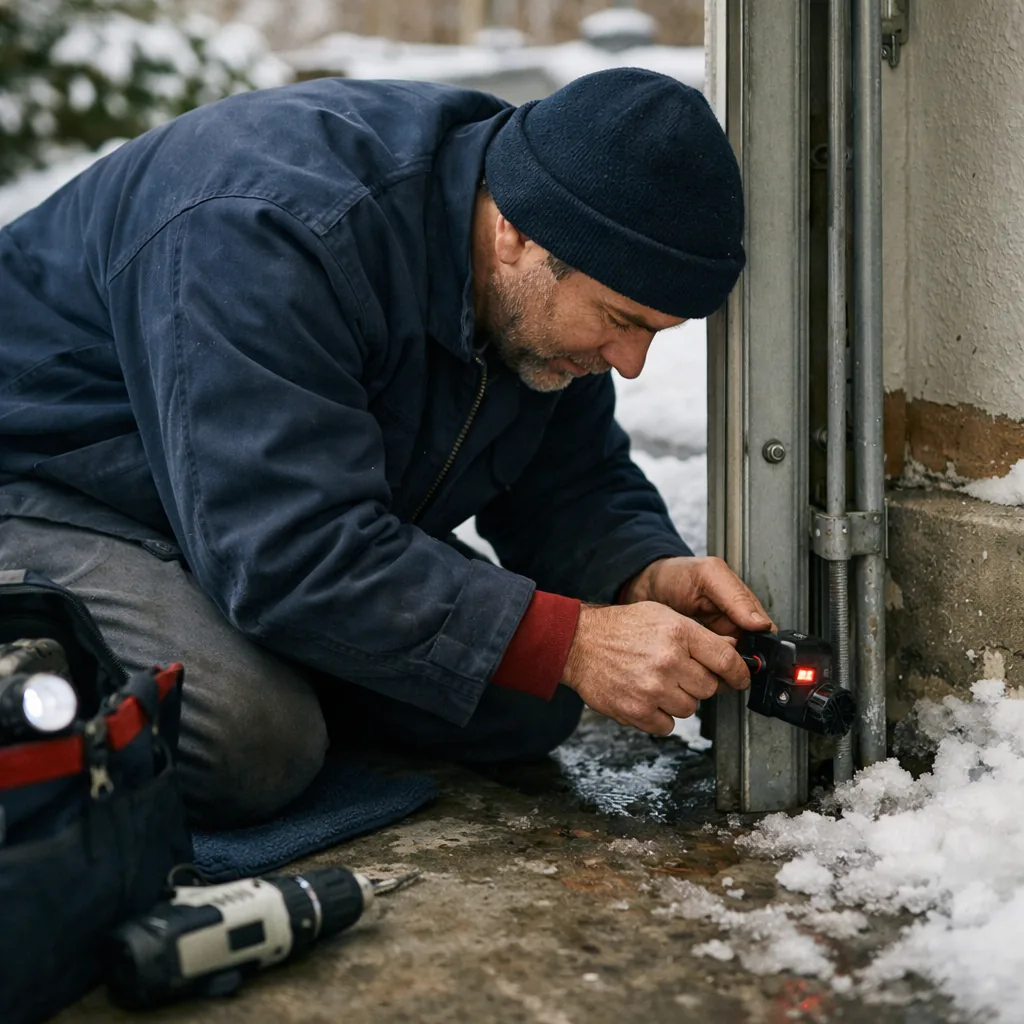
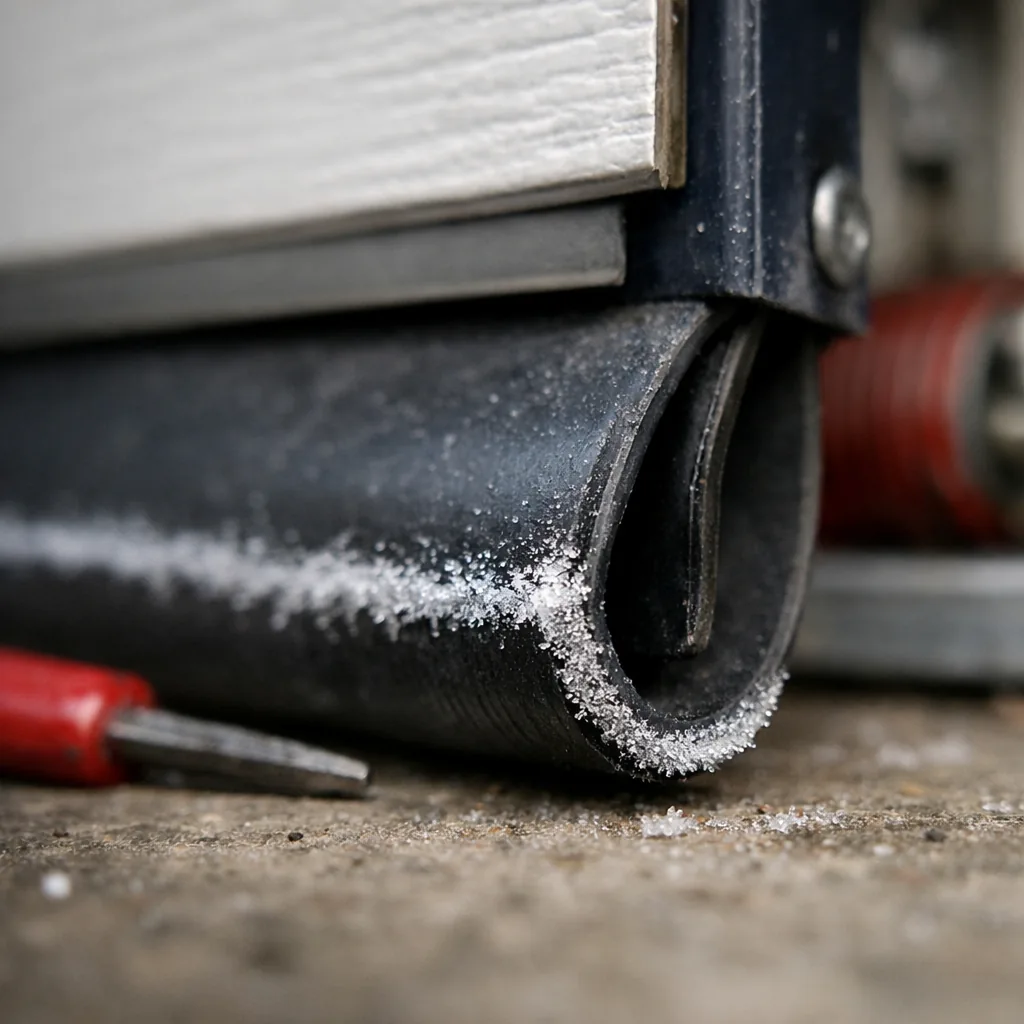
A door that starts down and then reverses is the most common symptom. The opener reads extra resistance as an obstruction and backs off, which is its safety function working as designed. Frost or ice under the bottom seal, a layer of snow in the doorway, or a sensor lens fogged with condensation can cause the same thing. Sensor lights that blink or stay dark point to alignment or a blocked beam.
The keypad is a separate problem. Batteries lose output in the cold, so a keypad or remote that works in the afternoon may go quiet on a freezing morning. Boston's freeze and thaw cycles, wet snow and road salt make all of this worse, because meltwater refreezes in tracks and on the seal overnight. A contractor can identify which of these is the cause from what you describe.

Diagnosis
What a good contractor checks first
Bottom seal and floor
Ice or a frozen seal can hold the door off the floor or trip the reverse. Clearing it and checking the seal's condition is the first step.
Rollers, hinges and tracks
Cold, hardened grease slows the door. Cleaning and re-lubricating with a product made for garage doors often restores smooth travel.
Safety sensors
Condensation, frost or a knocked alignment on the sensors near the floor stops the door from closing. The lenses and brackets are checked.
Opener force and travel limits
If the settings are too tight, the door reverses on slight resistance. They can be adjusted without parts.
Remotes and keypad batteries
Weak cells fail in the cold before they fail in the warm. Fresh batteries and a re-pairing fix many cases.
Spring and balance
A worn spring shows up first in the cold, when the door is already stiff. A balance test rules it in or out.
-
Call and describe what the door does
Say whether it reverses, stops halfway, stays open or ignores the remote, and mention any blinking lights on the sensors.
-
We connect you
We pass the details to a local contractor who handles cold weather garage door problems in your part of Greater Boston.
-
The contractor takes it from here
You speak to the contractor directly, and they give you the quote for the repair.
-
You decide
Ask what they think the cause is and what the repair involves, then choose whether to go ahead.
A garage door that stays open on a freezing night is an invitation to trouble.
Describe what it is doing and get connected with a local contractor.
Boston, MA
Cold weather repairs and finished results

FAQ
Cold weather garage door questions
Why does my garage door reverse when it is cold?
The opener senses extra resistance and backs off, which is its safety feature. Stiff grease, a frozen seal or ice on the floor causes the extra resistance. If the opener itself seems weak, opener repair is worth discussing with the contractor.
Why does my keypad stop working when the temperature drops?
Batteries deliver less power when cold, and a keypad draws from a small cell. Replacing the battery often fixes it. If the keypad is still dead after that, the contractor can test the receiver.
Can I just lubricate the door myself?
Light lubrication of rollers and hinges with a garage door lubricant is fine for an owner to do. Do not touch the springs or the cables, which are under high tension. If the door still struggles, the problem is likely spring balance, and spring repair may be part of the answer.
What should I tell the contractor when I call?
What the door does when you press the button, whether the sensor lights are lit, and whether the problem happens only in cold weather. Mention any ice at the bottom of the door. Those details point to a likely cause before anyone arrives.
Do you repair the door yourselves?
No. Boston Garage Door Expert connects you with an independent local contractor. The contractor gives the quote and does the work, and you decide whether to go ahead.
Boston, MA
Ready to get the door closing again?
Describe what the door does once and get connected with a local contractor who can take it from there.